
01 / 08
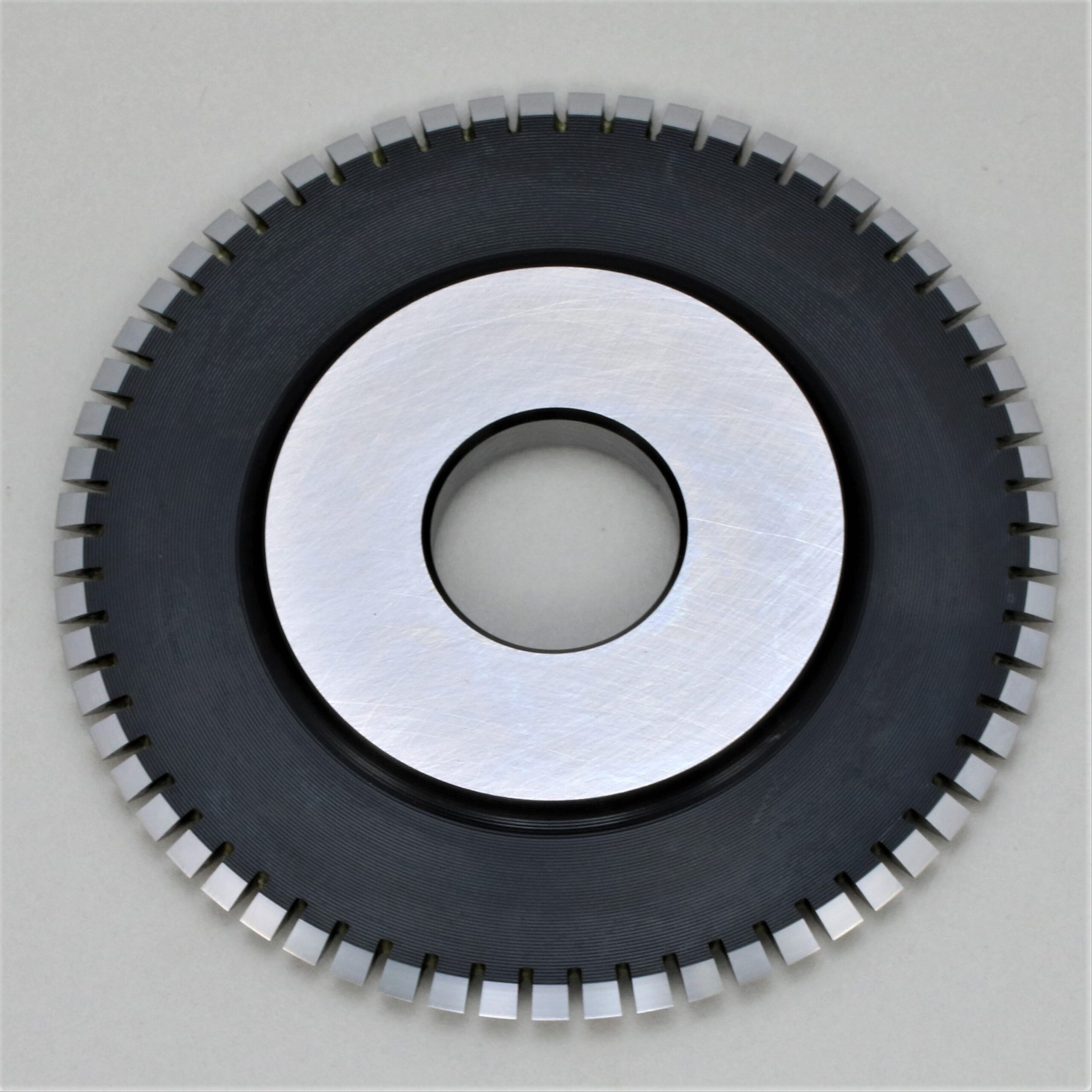
Perforating Blades
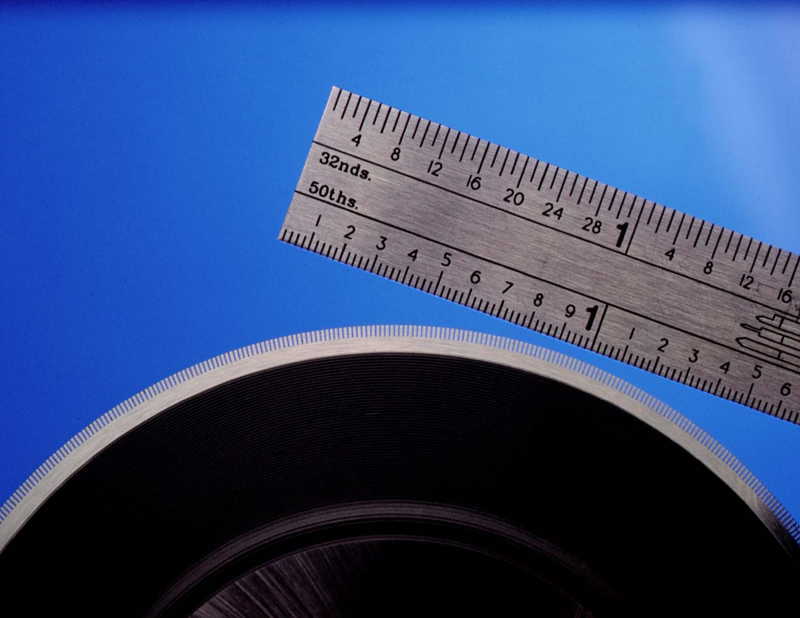
Repeating cuts and uncut ties form a tear line.
Try “pinking”, “300-45-005” or “3 in OD” · Fractions, inches & mm
Industrial Services
From blade resharpening and perforating to custom knives, precision machining and assemblies, put our manufacturing experience to work on your next project.
We can also quote regrinding and perforating work on blades from other manufacturers.
Find the Help You Need
Choose a service to see how we can help and what to include in your inquiry.
We check each blade to see if it can be reground. On request, we can match outside diameters (ODs), or scrap and replace blades below the minimum OD you specify.
Most regrind jobs take 1–2 weeks.
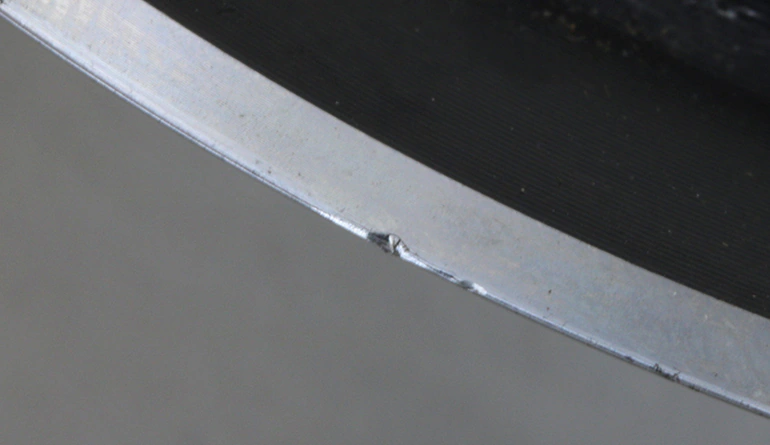
A nick in the cutting edge
To clear a nick, we grind the rim back to sound metal. A deeper nick can require more material removal and leave a smaller finished outside diameter.
We resharpen Portage blades and other makes. Send your quantity and a part number, photo or sample so we can assess the edge, condition and remaining dimensions.

Jump straight to any example.
Choose any blade type, swipe, or use the arrows to explore cutting profiles.
Repeating cuts and uncut ties form a tear line.

A pointed tooth pattern produces a zigzag edge.

A rounded profile produces a wavy edge.
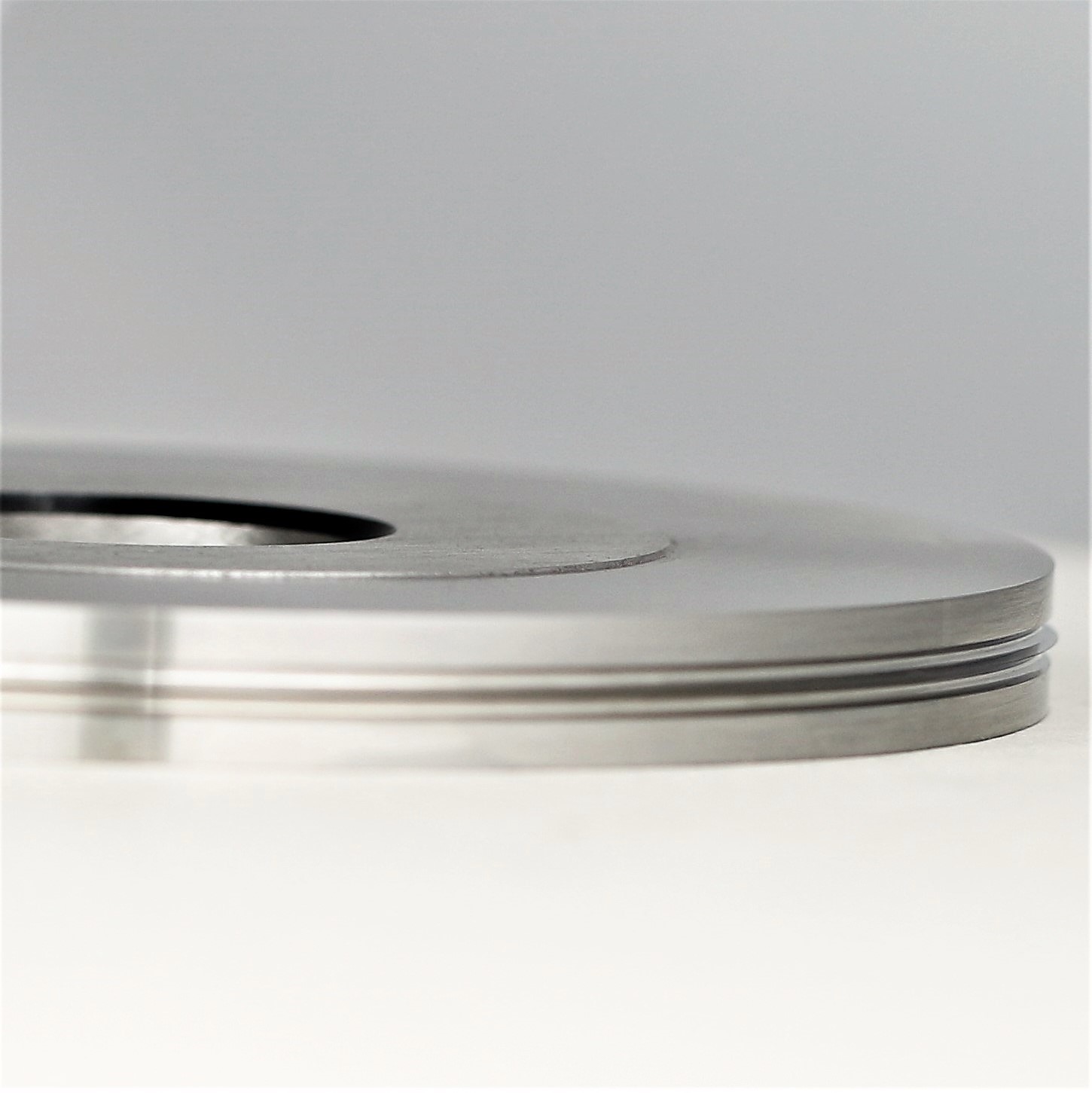
Cuts through the material and most of the adhesive while leaving the back layer intact.
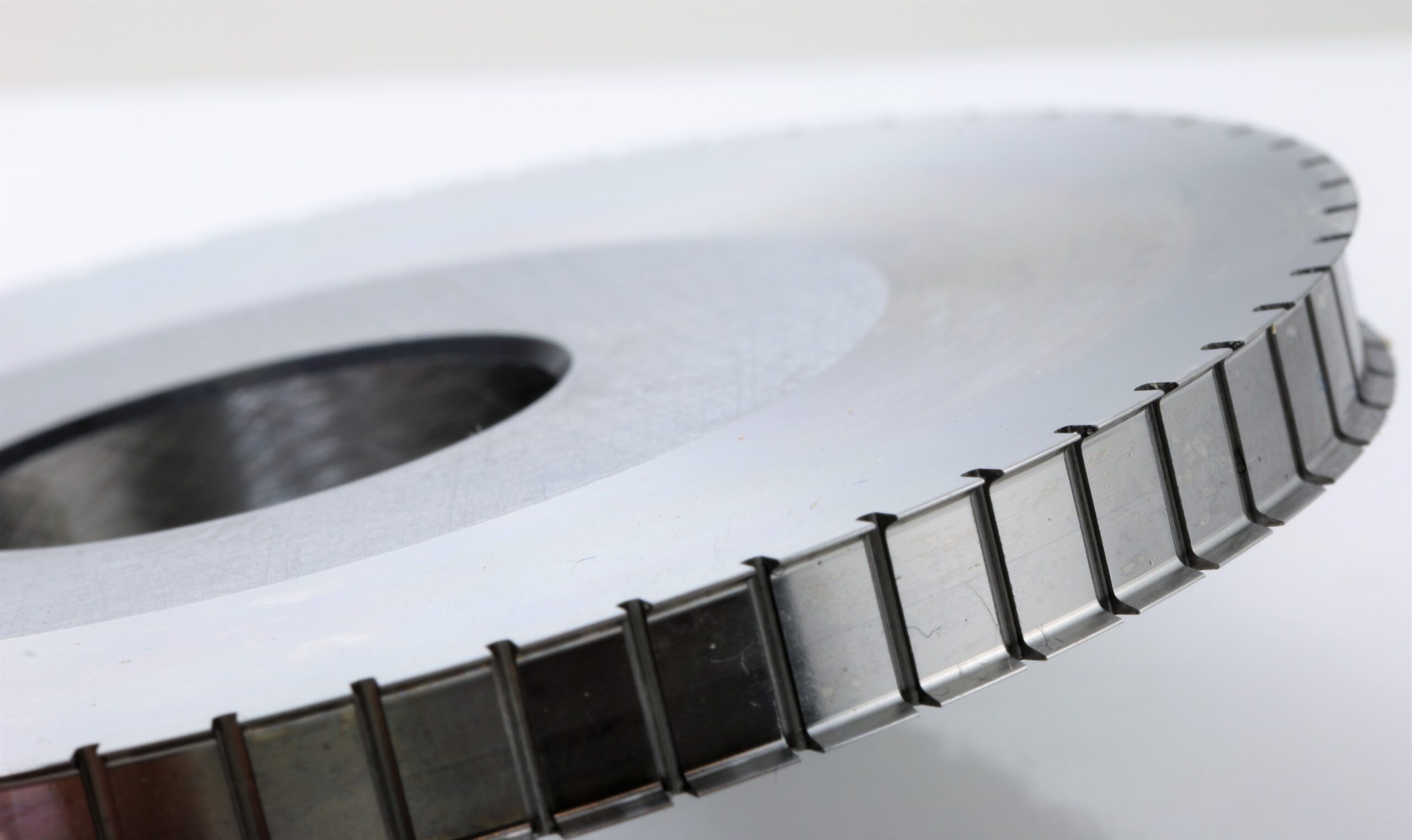
Creates two tracks in one pass, with optional perforations to produce two timed tracks.
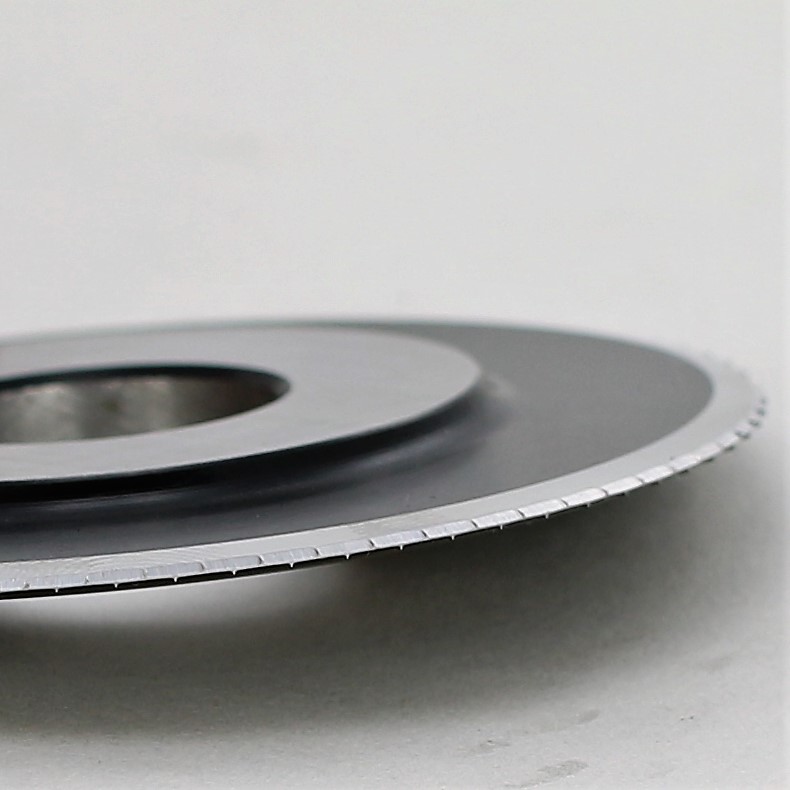
A straight cut with short, perpendicular tearpoints staggered on opposite sides.
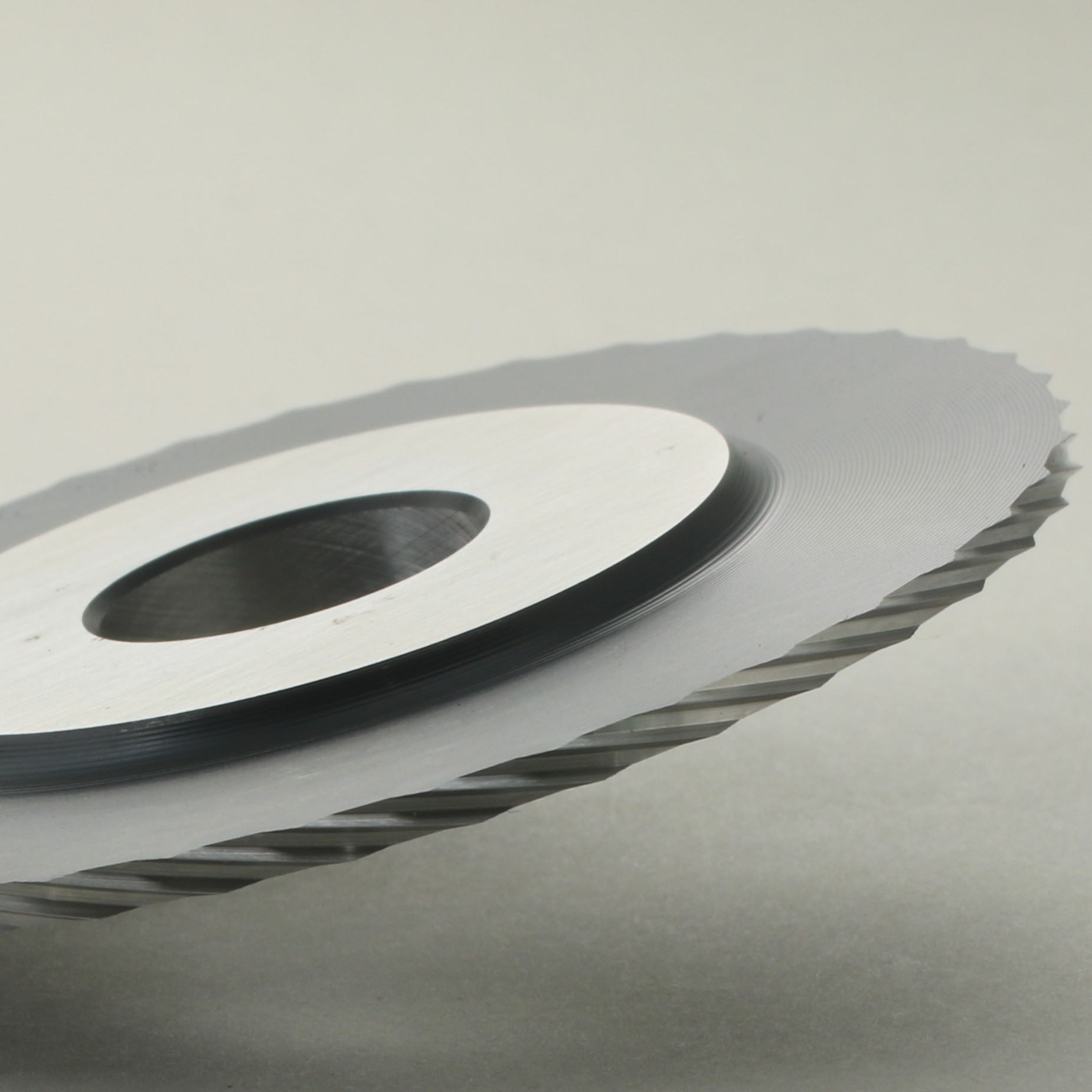
Paired left- and right-hand blades make angled cuts for Zip Strip packaging.

A crimping profile binds two adhesive materials together.
We manufacture specialty knives for your cutting application. Share a drawing, sample or description of the cut you need, and we’ll review the profile, dimensions and material with you.
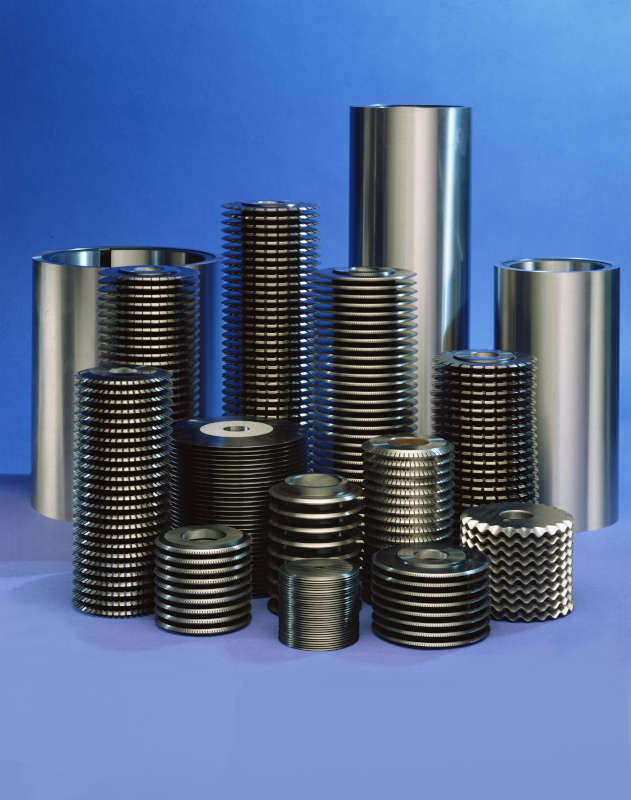
We perforate Portage blades and can review blades from other suppliers. Browse perforator blades →
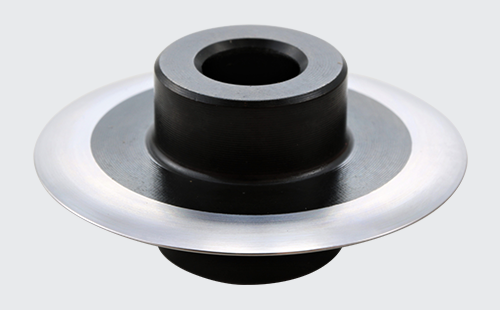
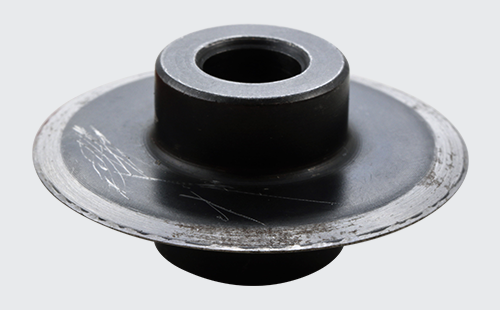
Drag to compare, or use the arrow keys.
Bring us a sample, drawing or starting dimensions. Our engineering team can help define a replacement part or a design for a new cutting application.
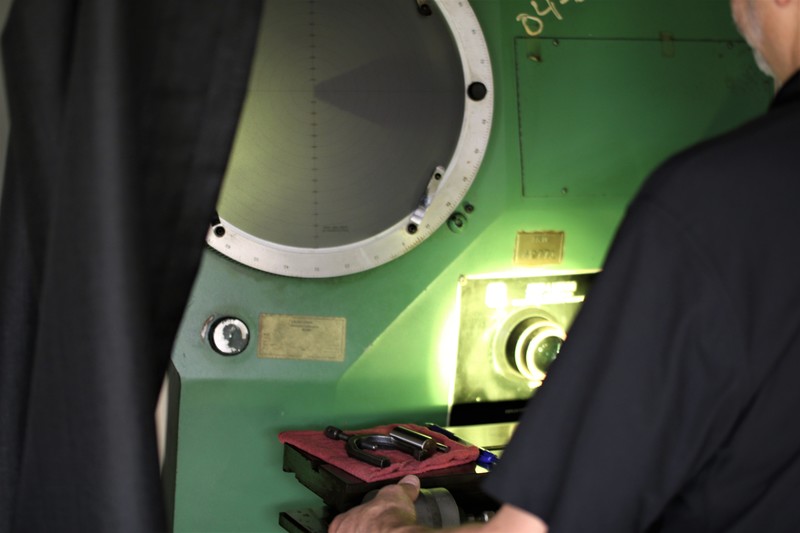
Our 28,000-square-foot facility supports production runs and specialized parts well beyond knives. CNC lathes, mills, grinders, hones and saws, together with automated machining cells, give us the equipment to take on a wide range of machining projects.
We also offer heat treatment, anodizing, black oxide treatment and TiN coating to complete your parts. Discuss your specifications, quantities and delivery schedule directly with our team by phone—we’ll help coordinate the work around your project’s needs.
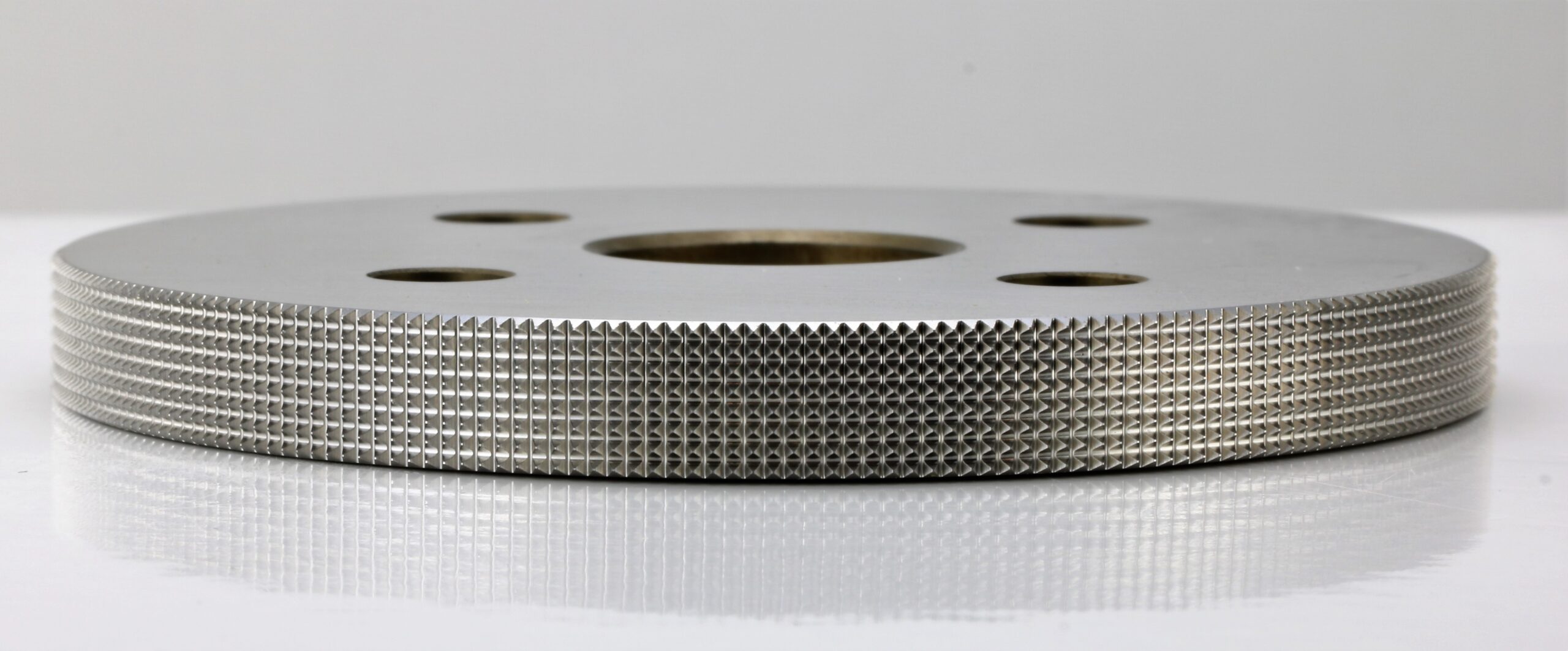
Build your holder with compatible blades and components. We’ll review fit and assembly scope before quoting the configuration.

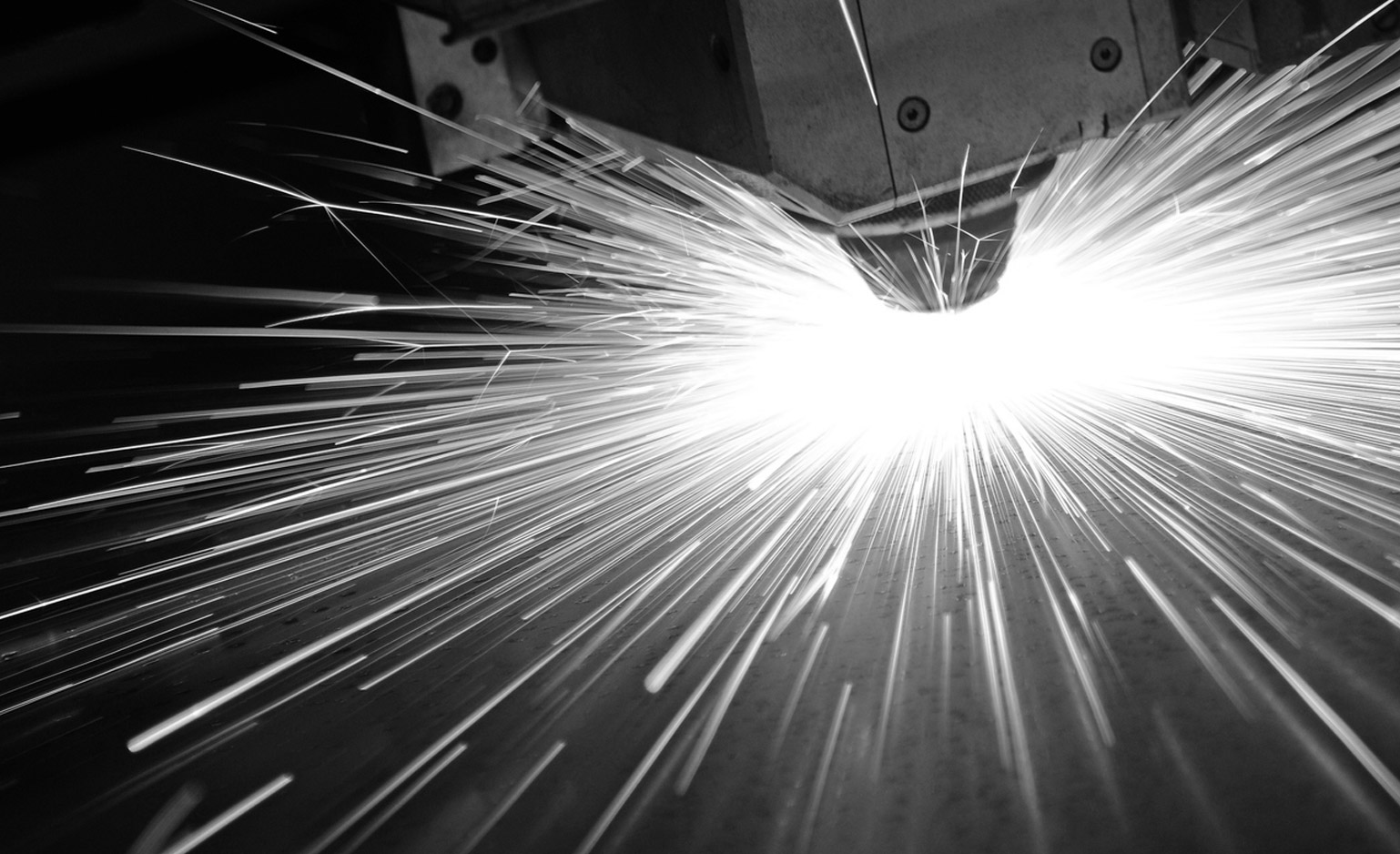
Put useful identification directly on your blades and components. Laser etching can add part numbers, serial numbers, dimensions or your company logo, helping your team identify parts while presenting your brand. Share the text or artwork and the item to be marked, and we’ll review the marking location and requirements with you.
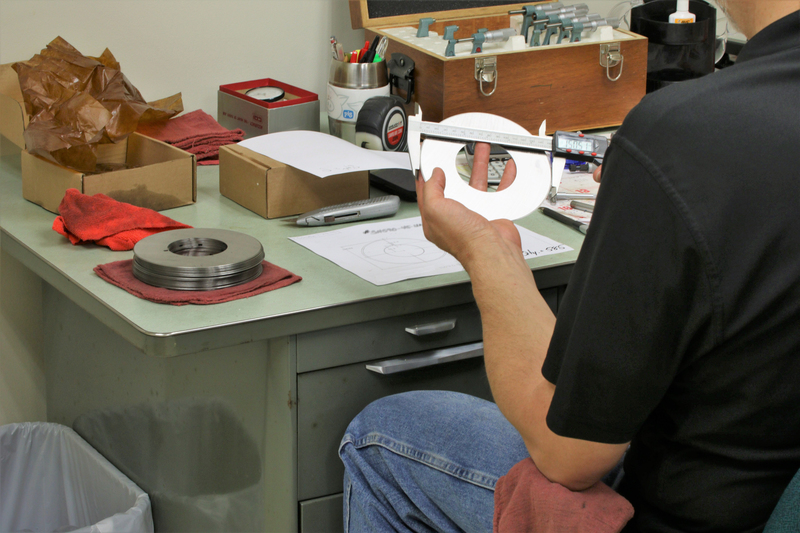
Access the capabilities of our long-established sourcing partners through one point of contact. These partners understand Portage Knife’s reputation for quality, and our engineering team inspects and approves everything we source. Share your part requirements and quantity; we’ll coordinate the sourcing and review so you have a knowledgeable team behind the parts you order.
Custom Part Development
An example of how we turn an existing part into a newly manufactured replacement.
An example of custom part development. A photo, drawing or initial requirements can also start the conversation; not every service requires a sample.
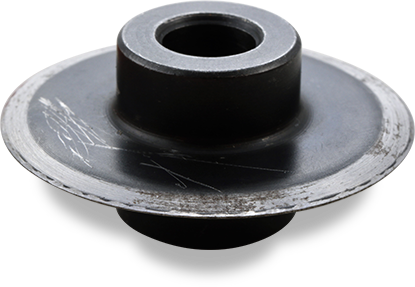
We evaluate your existing part.
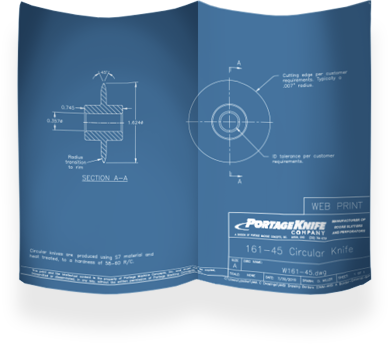
We develop the drawing.
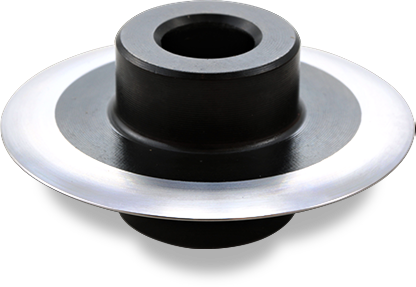
We manufacture your new part.
From Requirements to Parts
Different profiles, custom features and component arrangements. Tell us what your application needs.

Angled slots are one example of a feature to discuss for a custom blade.
Explore Custom Knives →
This pinker-perf example illustrates a distinct profile for a converting application.
Explore Perforating →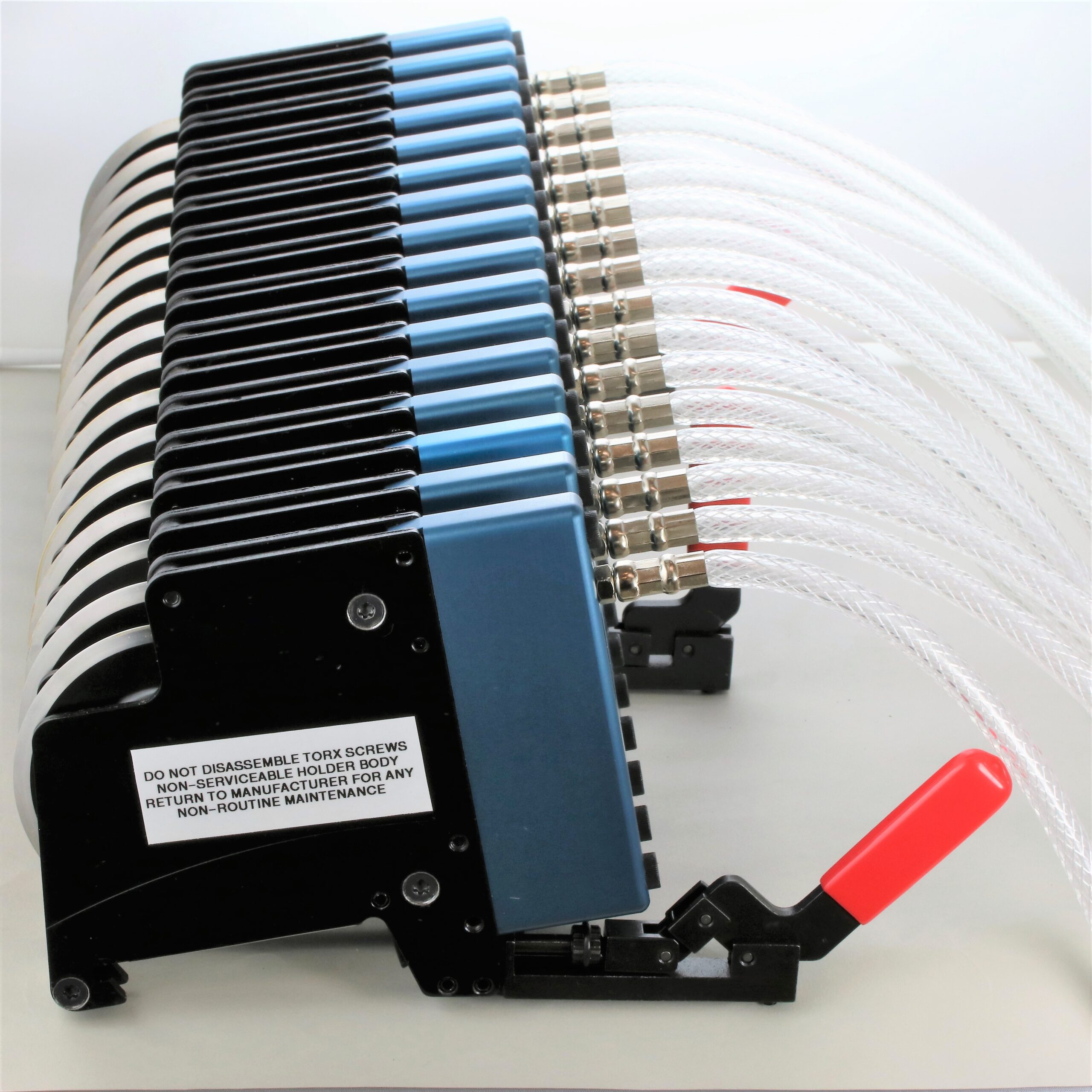
Holder banks bring multiple components together in a specified arrangement.
Explore Assembly →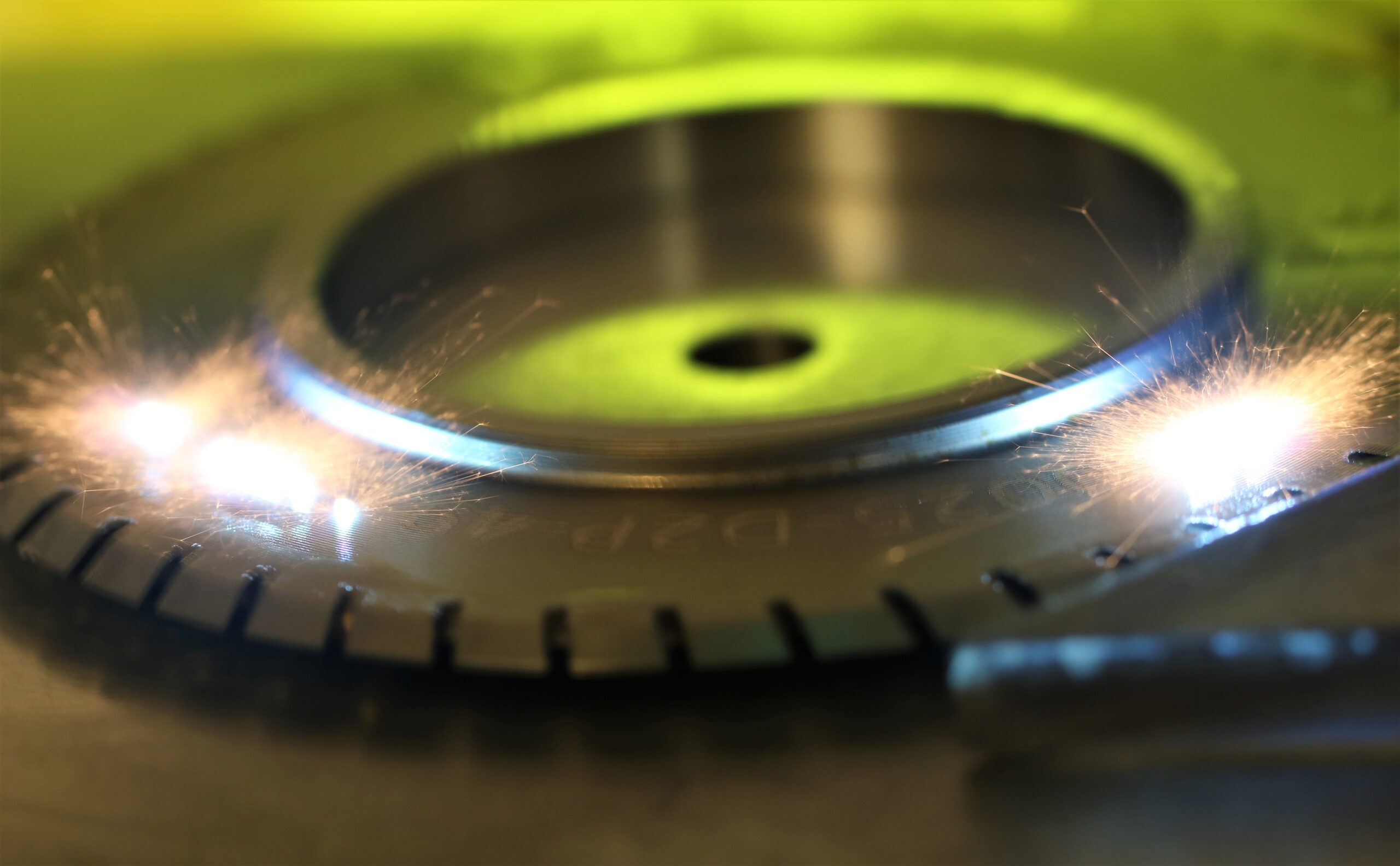
Custom laser markings put part identification or branding directly on a component. Share the text or artwork you would like included on your finished parts.
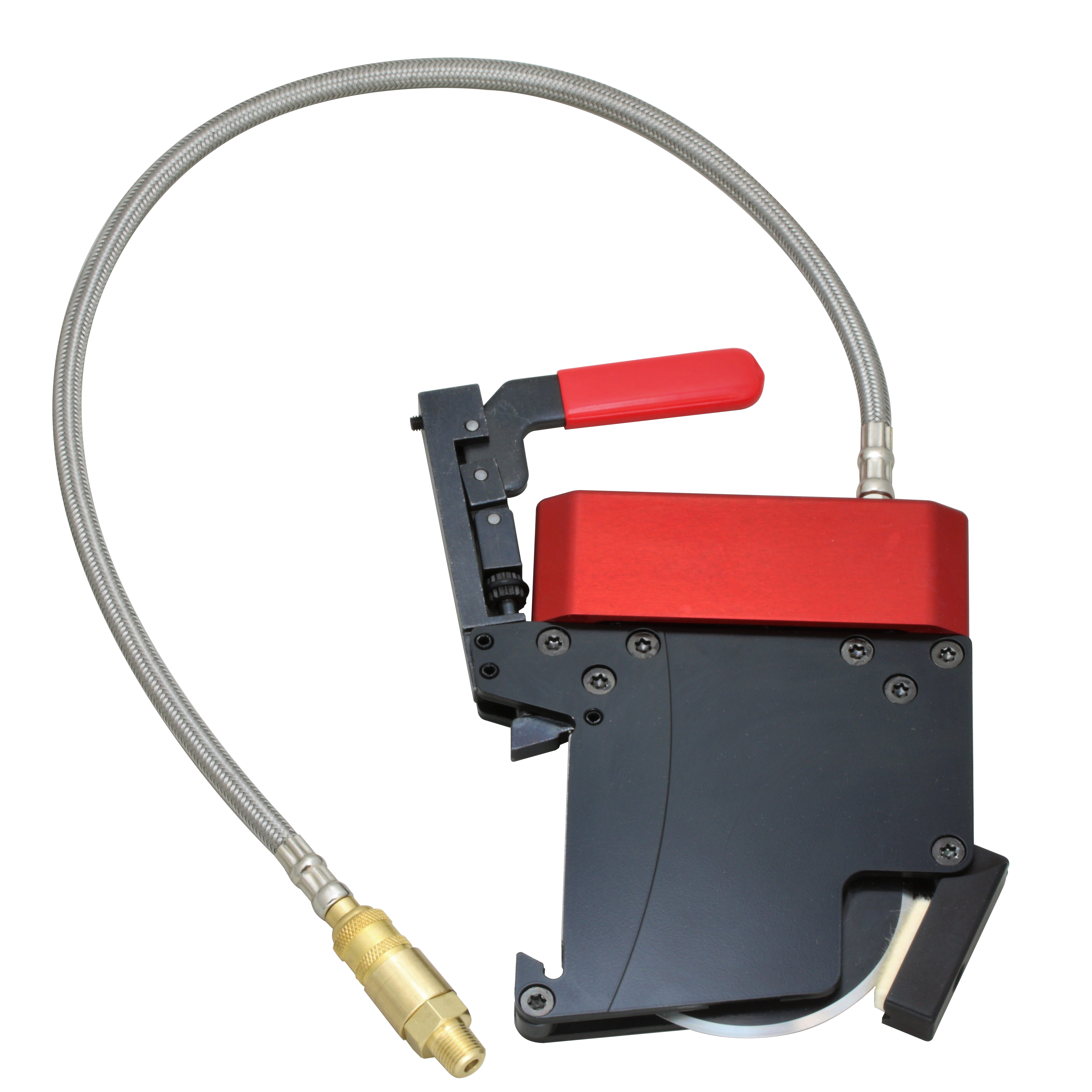
Explore Laser Etching →A larger piston area can provide greater blade force at the same air pressure compared with the standard chamber. Shown with an optional quick clamp and lube arm.
Explore Holder Assembly →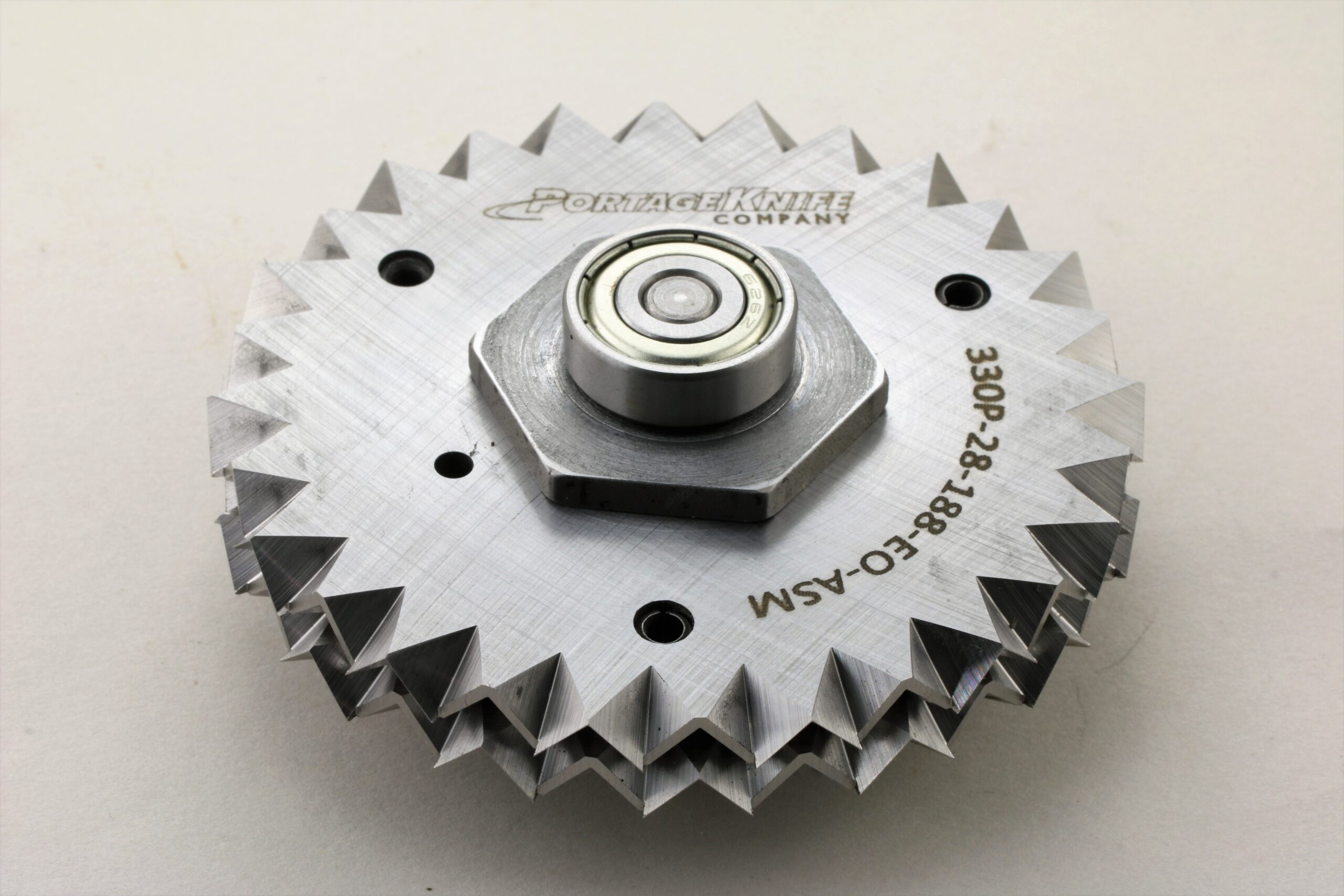
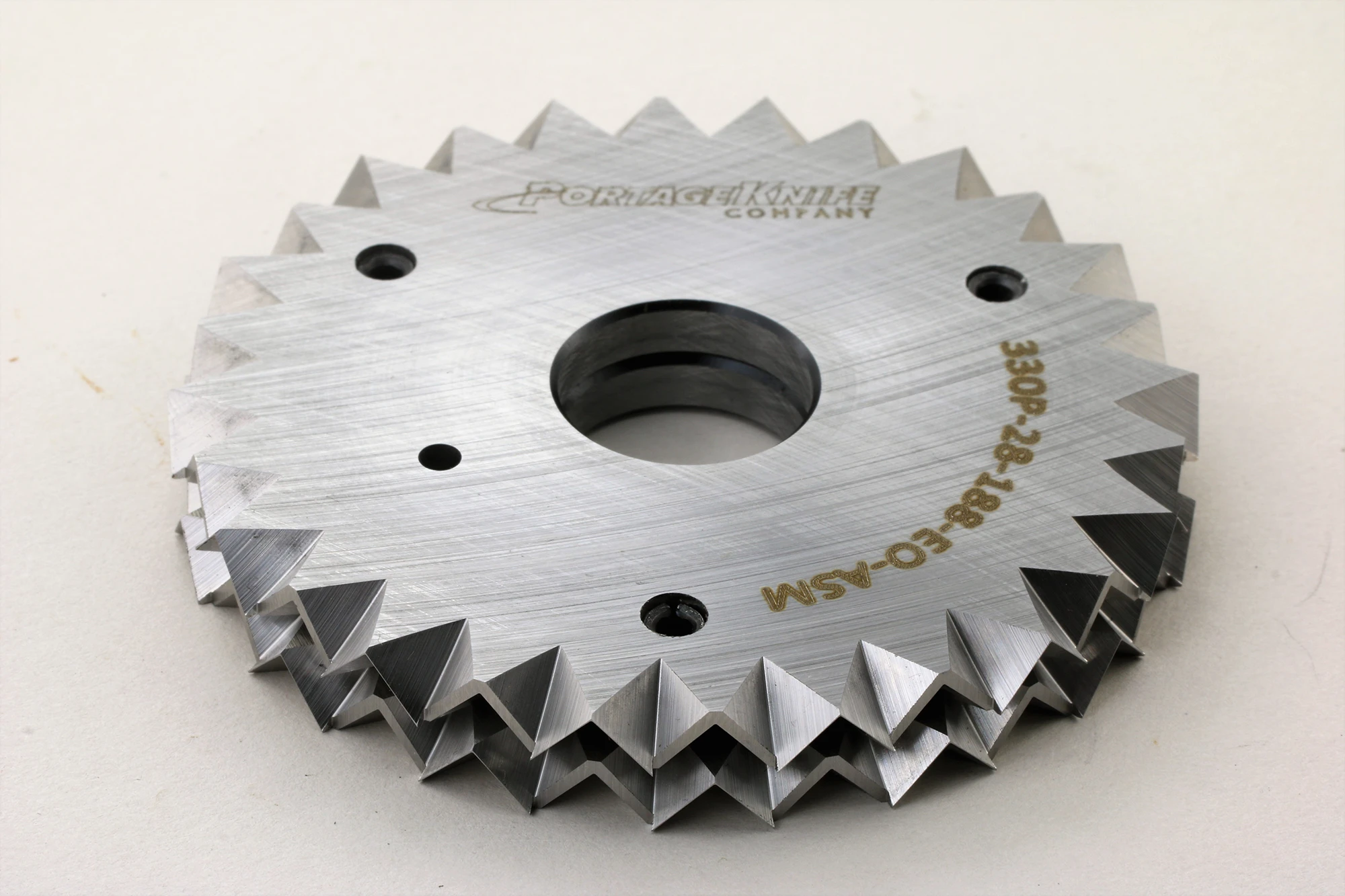
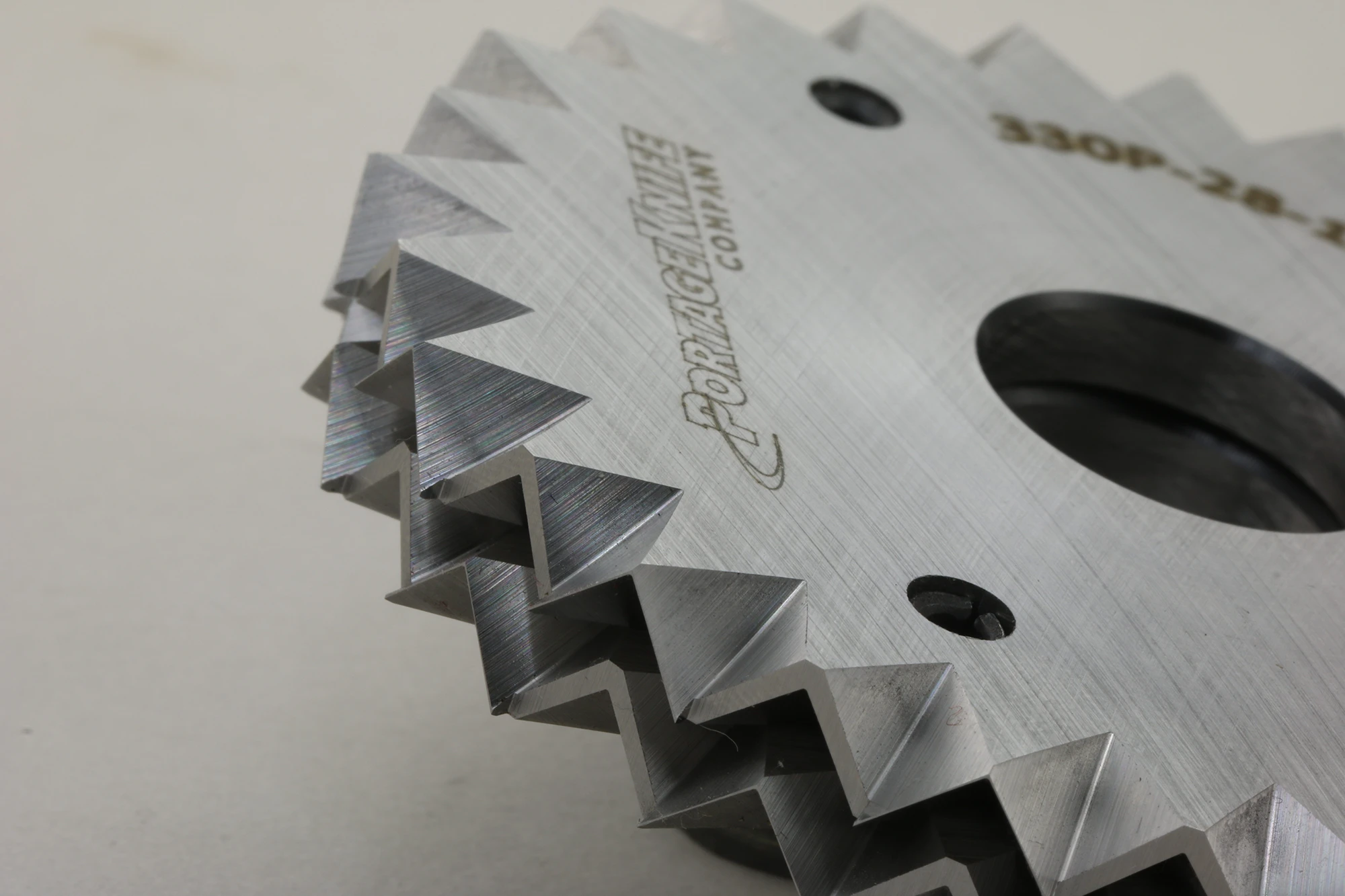
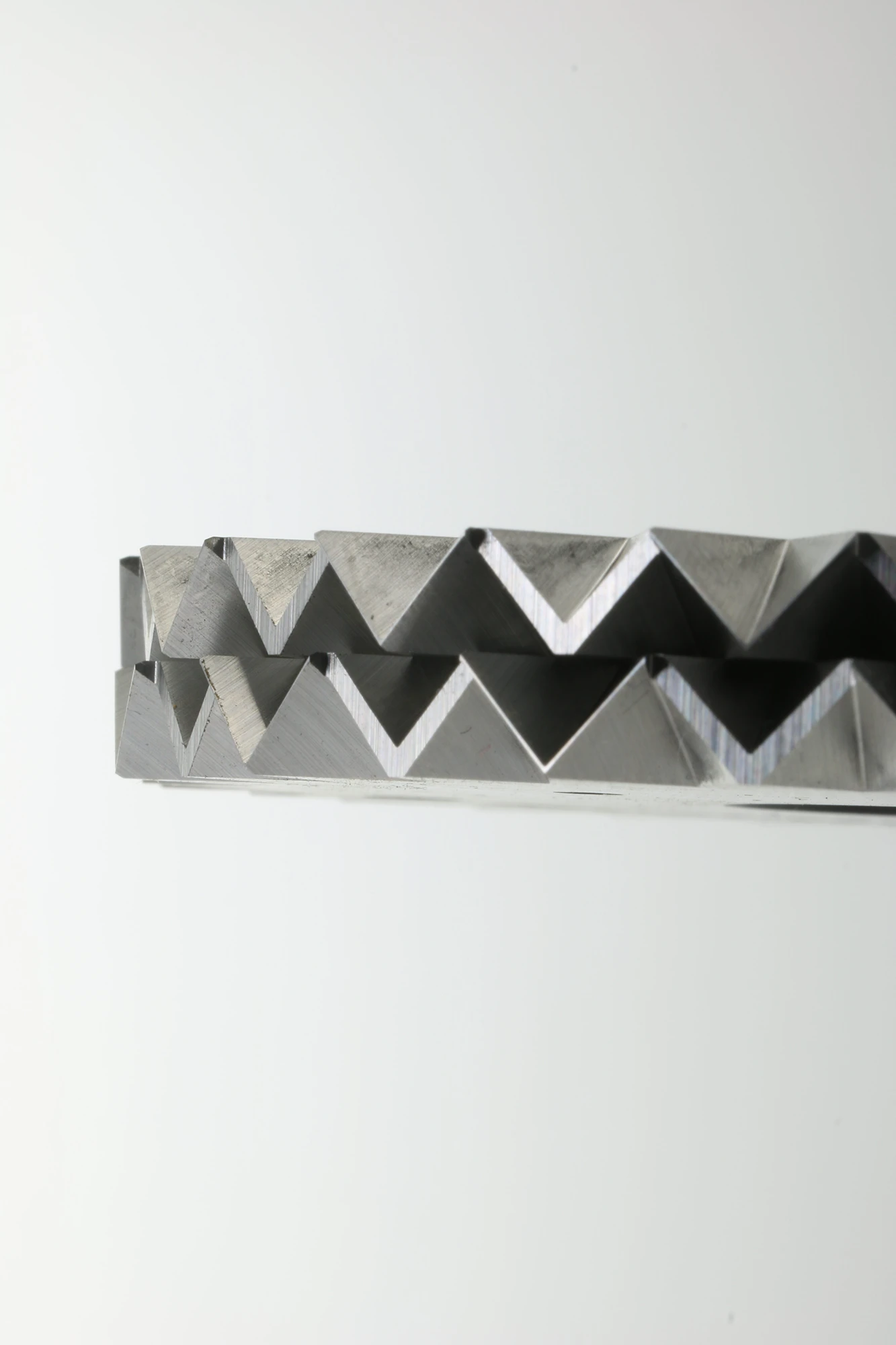
Two synchronized pinking blades, each with every other tooth ground away, work together to produce a distinctive packaging strip. The tooth patterns and timing are coordinated for this application.
Explore Custom Knives →Getting Started
You don’t need a complete production drawing to make an initial inquiry. Share the part or application and the result you’re looking for.
A part number, photo, drawing or description is enough to open the conversation.
Share the quantity, relevant dimensions and what you want to achieve. Blade condition, a perforation pattern or marking artwork can help define the work.
Review the proposed work, quantities and timing before placing your order.
Share a part number or photo and any measurements or previous order details. We can discuss whether a sample or more detailed drawing is needed.
We review regrind inquiries for Portage blades and blades from other suppliers. Suitability depends on the blade’s condition and remaining dimensions.
We review customer-supplied blades, including blades from other suppliers, for perforating suitability. Send the blade details, condition and desired pattern so feasibility can be assessed.
Timing depends on the item, quantity and work required. Include your requested date and ask for the current estimate for your project.
Send a part number, photo or drawing, along with your quantity and requested timing.